Chinese appliance brand Dreame is ramping up efforts to secure valuable floor space in Australian retail chains just as concerns mount over the company’s aggressive Amazon driven strategy and widening ambitions far beyond consumer electronics.
Fresh from a high profile showcase in San Francisco, the Chinese company is now attempting to position itself as a global lifestyle and technology powerhouse spanning everything from robotic vacuums and beauty appliances to televisions, PCs and even electric vehicles with a major event in Melbourne last week aimed at convincing retailers that they are an “important retail brand” with some observers claiming that they are a “dangerous brand” using retailers to grow online direct sell sales.
But behind the glossy marketing and premium branding lies a growing question for Australian retailers: why support a company whose business model increasingly appears designed to benefit Amazon and direct online sales over traditional bricks and mortar partners?
Industry analysts and retailers are increasingly wary of Dreame’s dual track strategy, one that uses physical retailers to build credibility and showcase expensive premium products, while simultaneously driving high volume sales through Amazon at heavily discounted prices.

The concern is particularly acute in Australia, where major retailers such as Harvey Norman, JB Hi Fi and The Good Guys dominate access to consumers in key appliance categories and where showroom space is both expensive and strategically critical.
Retail executives privately argue that brands such as Dreame are effectively turning stores into “demo centres” where consumers can inspect products before purchasing them online at significantly lower prices through Amazon.
The friction is not new.
In Europe and the United States, Dreame’s rapid marketplace expansion has already triggered tensions with physical retailers frustrated by Amazon pricing that undercuts traditional retail margins during major global sales events including Prime Day, Black Friday and Prime Big Deal Days.
During these campaigns, Dreame has slashed prices on flagship robotic vacuum models by as much as 60 per cent in an aggressive bid to capture market share from established players including Dyson and Roborock.
Retailers claim they are rarely offered the same pricing support.
Despite the company’s attempt to cultivate a premium image, industry observers note that Dreame remains heavily dependent on online marketplaces and lacks the vertically integrated manufacturing footprint of larger established rivals.
The privately held company, which operates within the broader Xiaomi ecosystem, does not publicly disclose detailed manufacturing data, channel revenue splits, or precise factory ownership structures across China and Vietnam.
What has emerged instead is a highly coordinated expansion playbook.

Dreame typically enters new markets through an “online first” strategy dominated by Amazon and direct to consumer sales before later pursuing retail partnerships to establish mainstream credibility and premium positioning.
Analysts tracking the business say newer markets such as Australia are believed to skew heavily toward Amazon and online marketplace sales, in some cases accounting for more than 80 per cent of revenue before retail relationships mature.
The strategy presents a growing commercial dilemma for Australian retailers.
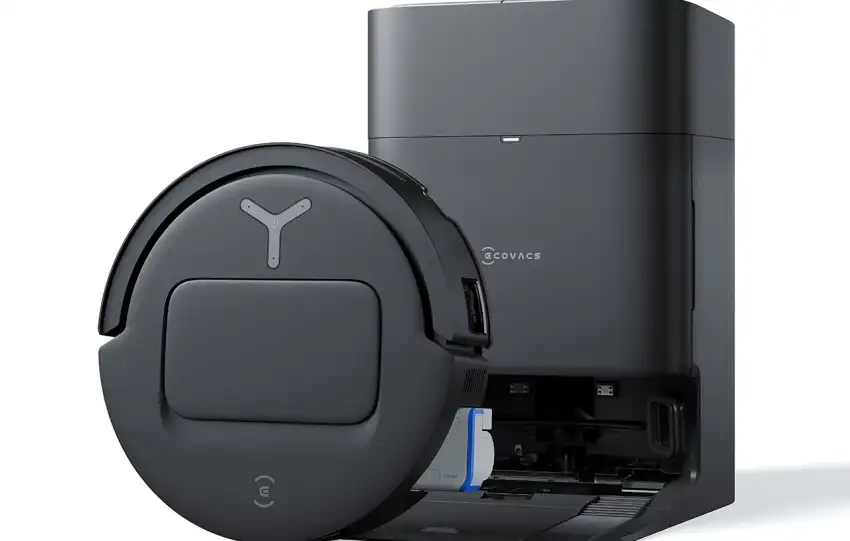
Physical stores remain essential for demonstrating premium products such as Dreame’s flagship X Series robotic vacuums, which can retail for more than $2,500 and often require live demonstrations to justify their price points.
Retailers are now being courted to provide exactly that environment.
Dreame has increasingly pushed retailers to install interactive displays and live cleaning demonstrations to showcase automation features and ecosystem integration across multiple product categories.
However, critics argue the arrangement disproportionately benefits Dreame and Amazon, with retailers absorbing the cost of floor space, staffing and demonstrations while online marketplaces capture a significant share of final transactions.
To reduce backlash from retailers over aggressive online discounting, Dreame has increasingly adopted a “custom SKU” strategy, supplying slightly different model variants to physical retailers than those sold online.

While the tactic helps avoid direct price matching, retail analysts say it also makes pricing less transparent for consumers and creates additional pressure on retailers already struggling against Amazon’s scale and discounting power.
The company’s ambitions are also rapidly expanding beyond home appliances.
Dreame has confirmed plans to move into electric vehicles, with Australia and New Zealand identified as potential first wave export markets ahead of a proposed 2027 launch.
That expansion has fuelled further concerns among retail observers who question whether the company is attempting to become a “jack of all categories” technology brand without the manufacturing depth or specialist expertise typically associated with global leaders in those sectors.
At the same time, Dreame has accelerated investment in direct-to-consumer sales channels, using its own websites not only to sell replacement parts and accessories but increasingly to cross sell broader lifestyle products including air purifiers, robotic lawnmowers and high-speed beauty appliances.
For Australian retailers already under margin pressure from international marketplaces, the rise of companies like Dreame highlights a growing structural threat facing the local retail sector: brands using traditional stores to establish trust and visibility while directing long term volume growth toward Amazon and direct online ecosystems.
The result is an increasingly uncomfortable question for local retailers, whether they are partnering with a premium global brand, or simply financing the growth of another Amazon first marketplace player.